Monday, August 21, 2006

Bachman's Warbler?

The Cornell Lab of Ornithology has posted video of a possible Bachman's Warbler on its website. This film was shot in Cuba in January 2002. After recording the bird, the photographer used field guides to identify it as a female Bachman's Warbler. Cornell's ornithologists reviewed the video and deemed it inconclusive. They have asked for comments from experienced observers.

What do you think of the video?

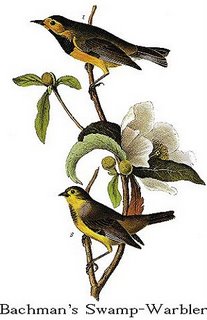
For comparison, here is a painting of male and female Bachman's Warblers by John James Audubon.

Sunday, August 20, 2006

New Rules For Canada Goose Management

The U.S. Fish and Wildlife Service is making it easier to kill Canada Geese without a permit. Its new rules apply to airports, landowners, and state wildlife officials and are intended to reduce the population of resident geese along the Atlantic Flyway, where the number of geese increases at a rate of about 2 percent per year. Large numbers of resident geese have resulted in safety problems at airports, conflicts with golf courses and other private landowners, and obstacles for habitat restoration.

The new regulatory program consists of three components. The first creates control and depredation orders for airports, landowners, agricultural producers and public health officials that are designed to address resident Canada goose depredation and damage while managing conflict. This component will allow take of resident Canada geese without a federal permit provided certain reporting and monitoring requirements are fulfilled.

The second component consists of expanded hunting methods and opportunities and is designed to increase the sport harvest of resident Canada geese. Under this component, States could choose to expand shooting hours and allow hunters the use of electronic calls and unplugged shotguns during a portion of early September resident Canada goose seasons.

The third component consists of a new regulation authorizing the Director to implement a resident Canada goose population control program, or "management take". Management take is defined as a special management action that is needed to reduce certain wildlife populations when traditional and otherwise authorized management measures are unsuccessful, not feasible, or not applicable in preventing injury to property, agricultural crops, public health, and other interests. Under Management Take, the take of resident Canada geese outside the existing sport hunting seasons (September 1 to March 10) would be authorized and would enable States to authorize a harvest of resident Canada geese between August 1 and August 31. Management take would be available to States in the Atlantic, Mississippi, and Central Flyways following the first full operational year of the other new regulations.

In the DC area, there are between 500 and 600 resident geese living in the Anacostia watershed.

Limits on Menhaden Catch

Last week we reported that Osprey in the Chesapeake Bay area may be suffering due to the decline in Atlantic Menhaden. The fish, which are crucial to the diets of Osprey and other birds, have been in decline for the past two decades. At the end of the week, the Atlantic States Marine Fisheries Commission acted on the problem:
ARLINGTON, Va. A regional fisheries commission has agreed to cap the commercial catch of menhaden in the Chesapeake Bay.That cap is intended to give scientists time to assess the health of the tiny but important bait fish.

Meeting in Arlington, the Atlantic States Marine Fisheries Commission voted today to set the cap through 2010....

The annual catch will be limited to 109-thousand-20 metric tons, with flexibility for years when the catch is up or down.

Tuesday, August 15, 2006

John Bull Dies at 92

John L. Bull, an ornithologist based in New York City, died this past Friday. Among other accomplishments, he wrote the first guide to the birds of New York State, and co-authored the bird guide for the eastern region in the National Audubon Society's series of photographic field guides.

A research assistant at the American Museum of Natural History, Mr. Bull led popular birding tours of Long Island and Central Park in the 1960’s and 70’s and meticulously kept track of the species and the state of their habitat.

In 1964, he wrote a book, “Birds of the New York Area,” intended for would-be birders living in the suburbs of New Jersey, Long Island and Connecticut and for those in Manhattan itself, a prime birding destination. It covered the mourning doves of Central Park to the horned grebes off Montauk Point.

Mr. Bull later expanded his reach and wrote about all of the 410 bird species that had been recorded throughout New York State. That book, “Birds of New York State,” which was published in 1974, was the first exhaustive survey of the subject in 60 years. Another researcher, E.H. Eaton, had recorded only 366 bird species in 1914.

In Mr. Bull’s book, he noted the new or increased counts of species usually found at more southerly latitudes — like the snowy egret — and suggested that a milder climate might be at work in changing migration patterns.

Joel L. Cracraft, curator in charge of the ornithology department at the American Museum of Natural History, said the guidebook was “a first-rate state bird book.”

“At the time,” Dr. Cracraft said, “there was not a high-quality and professional account of the great diversity of New York’s species and their distributions.”

Declining Menhaden May Threaten Osprey Reproduction

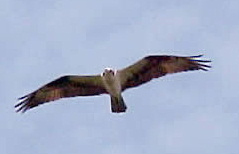
The Osprey population of the Chesapeake Bay region has been adversely affected by the decline of Menhaden, a small fish, along the Atlantic coast. The Chesapeake has one of the largest breeding populations of Osprey anywhere, with close to 4,000 pairs. Within the last decade, researchers have found increasing numbers of malnourished and dying chicks. They argue that this is because the Ospreys' preferred food, Menhaden, has declined sharply over the past two decades.
Menhaden filter the bay's waters by eating the microscopic plants and animals that consume dissolved oxygen needed by other aquatic life. In turn, they're a primary food source for sport fish, such as striped bass, bluefish and weakfish, and seabirds, including loons, gulls and gannets.

Ongoing scientific research focuses mostly on the ecological role that menhaden fill underwater. Broader public awareness has centered on the fish's importance to recreational anglers. But, like striped bass, ospreys favor meals of menhaden over other fish.

"Of everything we know about the bay, this is one of the fundamental food chains: Ospreys eat menhaden," said Paul Spitzer, a Maryland ecologist who specializes in birds.

One study found that menhaden made up 70 percent of the diet of ospreys nesting on Mobjack Bay off the coasts of Gloucester and Mathews counties.

Other studies done along the Atlantic coast have turned up similar results.

Menhaden swim in large schools that skim the water's surface, and they move straight ahead rather than dart around like other fish.

That makes them a perfect prey for circling ospreys, as well as Omega Protein's spotter planes, which radio a school's coordinates to waiting boats.

A fishery commission is considering imposing limits on harvesting of Menhaden while more research is done to determine the causes of the fish's decline.

Sunday, August 13, 2006

Trip Report: Delaware Marshes

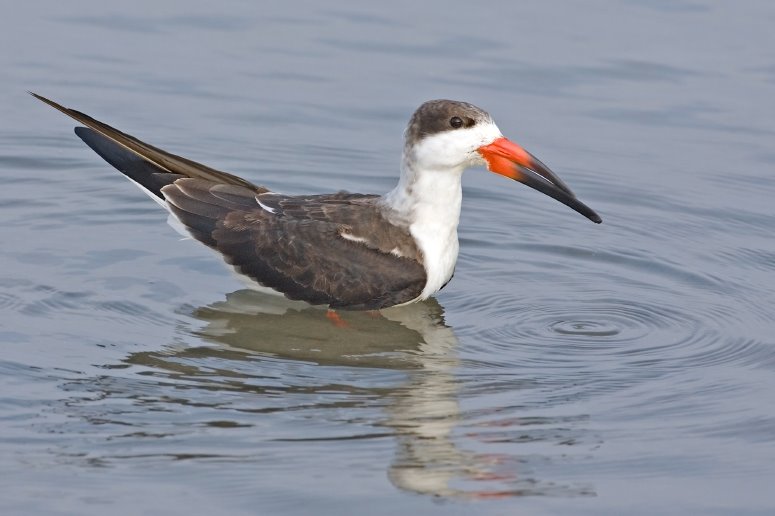
Black Skimmer / Photo via NaturePicsOnline

Four Audubon members set out from Washington on August 12 to look for late summer birds. The day was perfect for birding: high around 80, clear, and breezy. We set our sights on Bombay Hook National Wildlife Refuge. This refuge, which sits at the edge of Delaware Bay, consists of close to 16,000 acres of tidal salt marsh, together with several freshwater impoundments and upland hardwood forest. The diversity of habitats makes it possible to find many species of birds, especially during migration. Bombay Hook is a fine place to bird in any season, but is at its best during spring and fall migration. For a Washington-based birder, the attraction of this refuge is the ability to see many species of shorebirds that are hard to find at inland locations.

Read More...

Wednesday, August 09, 2006

Field Trip This Saturday

Join DC Audubon on Saturday, August 12, for its annual late summer field trip to Bombay Hook National Wildlife Refuge and the Delaware Marshes. During this trip we hope to see herons, shorebirds, and terns as they end their breeding season and begin their journey south. In addition, the marshes and woods of the refuge boast many resident species. One can see purple martins and blue grosbeaks near the visitor center, and other Eastern Shore specialties like seaside sparrow and marsh wren breed along the boardwalk trail. On our May field trip this year, we saw over 100 species in and around Bombay Hook. We may not reach that total on this trip, but we should see many beautiful and interesting birds during our trip through the refuge.

For a more recent account of Bombay Hook by a local birder, see here.

For directions and RSVP information, see our webpage. (It is important that you contact the trip leader as soon as possible if you intend to come.)

Sooty Shearwaters Have Longest Migration

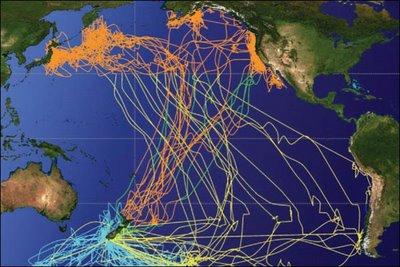
According to new research, sooty shearwaters make the longest known migration. The birds travel close to 40,000 miles each year from their breeding grounds around New Zealand to their wintering grounds in the North Pacific. That way, the birds can take advantage of the summer in both the northern and southern hemispheres. Scientists were able to track this route using electronic tracking tags.
Between January and March 2005, 33 birds at two breeding colonies in New Zealand were fitted with tags weighing 6g, allowing researchers to track their journey.

In the autumn of that year, 20 of the tags were recovered when the birds returned to their burrows at the breeding grounds; 19 of the devices had successfully recorded the bird's movements.

Data showed that some birds travelled up to 910km (565 miles) in a day, and dived to depths of 68m in their search for food.
One interesting result of the study is that individual birds do not travel around the circumference of the Pacific, as previously thought. Instead they travel quickly to one of the winter feeding grounds, located near California, Alaska, and Japan, and then return quickly to their breeding grounds at the end of the southern winter. Below is a map showing the travels of the 19 shearwaters with working tags.

Blue = Breeding season activity
Yellow = Flight north
Orange = Wintering activity and flight south

Saturday, August 05, 2006

Tracking Bees, Bugs and the Birds That Love Them


(From NPR) For decades now, ecologists have been attaching radio transmitters to the bodies of large animals: whales, bears, elephants, condors and eagles for starters. What these scientists haven't done is stick the same devices onto animals like song birds and big insects, those migratory flying things that sometimes mow down crops and spread diseases.

For eight years now, Wikelski's been the leader of a group of scientists who do collect those data points, with the help of radio transmitters no bigger than a baby's thumbnail. These scientists are known as "microtrackers" and for now they're few and far between.

But Wikelski's work is changing that by forcing ornithologists to change the way they think about migration. His first microtracking studies started nearly a decade ago when Wikelski captured groups of mid-Western thrush and glued extremely sophisticated radio transmitters to the bellies of these birds.

"The transmitters recorded heartbeat, breathing, wing beats and location," he said. "Once every second, they sent all this information out in concentrated bursts."

Wikelski says we know very little about how small animals migrate. Scientists would find out where birds are born and where they die. They would discover where birds are making pit stops on their trips home. And they would be able to track locust swarms and birds that could carry avian flu across international boundaries.

Wikelski turned the focus of his research to flying insects. With the help of prominent entomologists like Mike May of Rutgers University, he's been attaching even smaller transmitters to the backs and bellies of insects. Listen and read more on NPR.

Tuesday, August 01, 2006

Pesticide Action Alert

The following came from the American Bird Conservancy (via Birderblog).
URGENT - We have 24 Hours to Stop the Most Deadly Pesticide to Birds

The U.S. Environmental Protection Agency (EPA) is poised to make a decision on whether to ban the bird-killing pesticide, carbofuran. This is the most deadly pesticide to birds currently being used in the United States. It is more toxic than DDT. A single drop is enough to kill a bird.

We have just learned that because of pressure from the manufacturer, FMC corporation, the EPA may make the wrong decision and elect to keep this pesticide on the market. We have 24 hours to counteract the industry pressure. We need your help.

We ask you to email carbofuran@epa.gov, CCing gshire@abcbirds.org telling the EPA to ban carbofuran now because of its danger to birds, other wildlife, and people. Your email can be brief. Use the talking points provided below to help. What is important is that you tell them in your own words that you do not want carbofuran to be used in the United States. Alternatives exist that are equally effective and not deadly to birds. There is no reason to keep carbofuran registered.

Please send your email before 5pm Wednesday August 2, 2006!

Alternatively you can fax your comments to 202-564-0512.

Thank you for taking this emergency action on behalf of birds and wildlife,

George Fenwick
President, American Bird Conservancy

We provide the following talking points to help you let EPA know why this chemical must be banned:
  • All legal uses of carbofuran kill birds resulting in potential violations of the Migratory Bird Treaty Act (MBTA) every time it is applied. Farmers are placed in jeopardy of violating the MBTA whenever carbofuran is used, even if
    they follow the label directions.
  • Carbofuran is very toxic to people. Human risk assessments have been done three times and they show greater risks to farm workers each time they are refined. These studies indicate that carbofuran is too dangerous to use.
  • Carbofuran is so toxic it kills all the beneficial insects as well as pests with the result that integrated pest management cannot be done.
  • Carbofuran is so toxic that no crop rotation can be performed for ten months after application. This eliminates the possibility of crop rotation as a tool for reducing insect damage to crops.
  • Alternative chemicals exist for all crops except artichokes. Many alternatives exist for corn. Only a very small percentage of corn produced in the U.S. uses carbofuran now because of its environmental effects and safety issues.
  • New insecticides have been developed for rice, cotton, corn, and other crops specifically to replace carbofuran. Most of these are reduced risk chemicals presenting much less bird, wildlife, and human health risks.
  • Transgenic corn has been developed specifically for resistance to corn rootworm and European corn borer, further reducing the need for conventional pesticides.
  • The United States is a world leader in pesticide regulation. Cancellation of carbofuran will send a strong message to Latin America, Canada, and Mexico about the dangers of this pesticide. This will help save birds in those countries when they phase out carbofuran. Canceling the tolerances of pesticide residues on foods will immediately limit the use of carbofuran in all countries that export to the US.

Helping Birds in a Summer Heat Wave

During heat waves like the current week's, many birds suffer from heat illness, just like humans. To keep cool, birds will seek shade, pant, hold their wings away from their body, and bathe. You can help the birds around your home deal with the heat by taking a few steps.
  • Provide sources of water for drinking and bathing. Remember that smaller birds prefer shallow water. Some ideas for providing water are here. Empty and refresh the water to keep it clean and free of mosquito larvae.
  • Clean hummingbird feeders and refresh their sugar water regularly. Very warm conditions can lead to the growth of dangerous bacteria and fungi.
  • Keep any seed feeders clean of refuse where germs could breed and spread.

Remember to keep yourself safe by following the CDC's heat illness guidelines.

Monday, July 31, 2006

100 Years of Club Plummers Island


The Washington Post Features the The Washington Biologists' Field Club which is celebrating 100 years of self-professed geekdom (six years late) this year, with a 150-page volume summarizing a century of counting every living thing on Plummers Island, the club's buggy, overgrown paradise a few steps into the Potomac, just downriver from the American Legion Bridge.

Established in 1901 as a weekend retreat, Plummers Island, called by the field club "the most thoroughly studied island in North America," today represents one of the most comprehensive, longest-running biological inventories in the country.

Scrambling over Plummers Island's rock and scrub, club members have documented every living thing known to have existed there. To date, that includes 885 species of vascular plants, 70 mosses and 597 beetles -- not to be confused with the five different cockroaches they have found

The stories begin in 1899, when botanist Charles Pollard formed the Washington Biologists' Field Club, and began the search for a suitable field camp.
In 1901, the group leased Plummers Island, which it bought seven years later. For about $200, the members built at its rocky pinnacle a wooden cabin with few amenities beyond a big fieldstone fireplace and lean-to kitchen.

At the time, the island was a mix of untended farmland, forest, rock and shoreline. The blend drew plenty of creatures and plant life, and the members began collecting, each in his area of expertise.

For about three decades, Shetler has collected plants on the island. Opening a steel cabinet down the hall from his Smithsonian office, he flipped through yellowed folders. Inside rested mistflower specimens collected as early as 1917, the vivid blue blossoms on some still colorful.

*Washington Biologists' Field Club Website
Friday, July 28, 2006

High Levels of Mercury in Wood Thrush

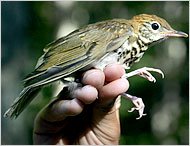
A study of songbirds in upstate New York has revealed very high levels of mercury in 178 species, with the highest levels being in wood thrushes.

The presence of mercury in lakes and streams is already well documented, and the New York Department of Health advises people to restrict the consumption of any freshwater fish caught in most of the state to no more than one meal a week.

But Dr. Evers is one of the first scientists to test for wildlife mercury contamination beyond fish. He began his work in this area in 1998 and found that common loons, which eat fish, had highly elevated levels of mercury that made them lethargic and caused their reproductive rates to drop.

He then decided to study songbirds, which never eat fish. In particular, he wanted to study the wood thrush, a small bird with a distinctive song that was once common throughout the Northeast. The population of wood thrushes has declined 45 percent in recent decades.

It was once thought that destruction of the bird’s forest habitat was responsible for the decline. But Dr. Evers now suspects that mercury contamination might be a factor, along with the wide-ranging negative effects of acid rain on the forests....

Dr. Evers’s work suggests that when mercury falls on land, it is absorbed by soil and by fallen leaves that are consumed by worms and insects. Songbirds then feed on the bugs, absorbing the mercury.

While all the birds he tested last year had mercury in their blood, wood thrushes had the most, Dr. Evers said, an average of 0.1 parts per million. That is below the federal safe standard for fish (0.3 p.p.m.) but high enough to affect the birds’ reproductive cycle.

With fewer songbirds to eat potentially harmful insects, the state’s forests would be at greater risk for damage by gypsy moths and other pests, Dr. Evers said.

Beyond that, mercury leaching into soil could find its way into the food chain in ways that are still unknown, he said.

Friday, July 21, 2006

Bombay Hook Trip Report Online

Eighteen enthusiastic participants joined trip leader Dhananjaya Katju for the DC Audubon Society's annual May field trip to Bombay Hook. This National Wildlife Refuge is one of the best birding spots within a day trip length drive from Washington, D.C. It combines woods, fields in various stages of succession, fresh water impoundments, tidal salt water marshes, and mudflats. The diversity and quality of habitats at Bombay Hook attracts a great diversity of birds. ... [read more]

Ruddy Turnstone / Photo by Peter Vankevich

If you missed DC Audubon's May field trip to Bombay Hook, you have another shot to watch shorebird migration with us. Watch our webpage for details on our upcoming field trip to the Delaware Marshes.

Mystery Gull


This photograph was taken by Peter Vankevich during a DC Audubon field trip to Bombay Hook. As you can see, it is a gull, but its identity is somewhat uncertain. Do you know what species this is? Leave a comment if you think you know. (The gull in question is the one in the center.)

Thursday, July 20, 2006

Ivory Billed Woodpecker Habitat Good News

ENDANGERED SPECIES: Judge stops $320M irrigation project on behalf of unproven ivory-billed woodpecker

A federal judge today temporarily stopped construction on a $320 million irrigation project in Arkansas in order to protect the habitat of the ivory-billed woodpecker, whose existence has been hotly debated since a claimed sighting in 2004.

U.S. District Judge William R. Wilson halted the Army Corps of Engineers' Grand Prairie Irrigation Project because federal agencies might have violated the Endangered Species Act by not studying the habitat fully. The construction site is 14 miles from where researchers said they spotted the bird in the swamps of the Cache River National Wildlife Refuge in early 2004. The bird had been presumed extinct for 60 years.

Since then, scientists have published a number of articles claiming the bird was actually a more common pileated woodpecker. Cornell University ornithologists continued their search this summer but to no conclusive avail. Most recently, Arkansas wildlife officials last month offered a $10,000 reward to anyone who can prove the bird's existence (Greenwire, June 22).
Wilson said for legal purposes he had to assume the woodpecker exists in that area. "When an endangered species is allegedly jeopardized, the balance of hardships and public interest tips in favor of the protected species," he wrote. "Here there is evidence the IBW might be jeopardized" (Andrew DeMillo, AP/Washington Post online, July 20). -- DK

Tuesday, July 18, 2006

Hummingbird Conservation in Peru

The American Bird Conservancy has joined with the Peruvian Asociación Ecosistemas Andinos to conserve vital habitat in northern Peru for a rare hummingbird.
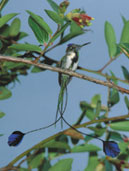
The hummingbird, known as the Marvelous Spatuletail, is among the strangest and most spectacular of all birds. Adult males have tails that are more than twice as long as their bodies and end in two great ungainly-looking spoon-shaped feathers. The birds are also cloaked in iridescent feathers, and like all hummingbirds, they are highly aggressive despite their small size. Local people once believed the birds conveyed aphrodisiac properties when consumed, likely compounding their problems which already include the conversion of their extremely limited habitat to cattle pasture and agriculture....

Despite its remote location, the area where the hummingbird lives is already known to birdwatchers. In order to find the species it is often necessary to commission the services of one of the world’s youngest bird guides, ten-year-old Solomon Ortiz-Perez, who for a small fee will lead eager groups of bird tourists up steep slopes to search for the bird. The spatuletail is fast becoming a flagship species for tourism in the area, and has already appeared in travel advertisements in American magazines that aim to attract keen birdwatchers to the bird’s remote habitat. It has also been declared the “Regional Bird” for Peru’s Amazonas region.
The American Bird Conservancy has engaged in similar efforts in Colombia to save wintering habitat for the cerulean warbler.

Friday, July 14, 2006

Waterlily Festival This Saturday

This Saturday, July 15, Kenilworth Aquatic Gardens is hosting its annual Waterlily and Founders Day.

Kenilworth Park and Aquatic Gardens
Annual Waterlily Festival
Saturday, July 15, 11:00 am to 2:00 pm
Park is open from 7:00 am to 4:00 pm 1550
Anacostia Avenue, NE (Anacostia Avenue and Douglas Street. NE)

Blooming lilies and lotuses
Storytelling and puppet show
Face painting
Gardening workshops
Pond and greenhouse tours

DC Audubon will be there and lead a bird walk in the gardens. Come meet some of our board members and field trip leaders. Look for our table in the picnic area near the visitors center. There is no need to RSVP for this bird walk; just meet up at our table at about noon.

This is a wonderful time of year to visit the Aquatic Gardens, since most waterlilies and lotuses will be at their peak. In addition to the flowers, the gardens attract a diverse array of breeding and migrant birds. The marsh and river trail offer additional birding opportunities.

Tuesday, July 11, 2006

Chickadees, Titmice, and DNA

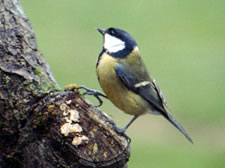
The current issue of Birding magazine has some interesting notes about recent research on chickadees, titmice, and other members of the Paridae family. (The report in Birding summarizes a study published last year in The Auk.) Researchers determined that the genus Parus, which used to contain all chickadees, titmice, and related species, should in fact be broken into multiple genera. The suggested division includes Poecile (chickadees) and Baeolophus (titmice) in North America. Eurasian and African tits are now divided into Parus, Lophanes, Periparus, and Cyanistes. The split of New World chickadees and titmice into the Poecile and Baeolophus genera is not new; the AOU recognized the split in 1998.

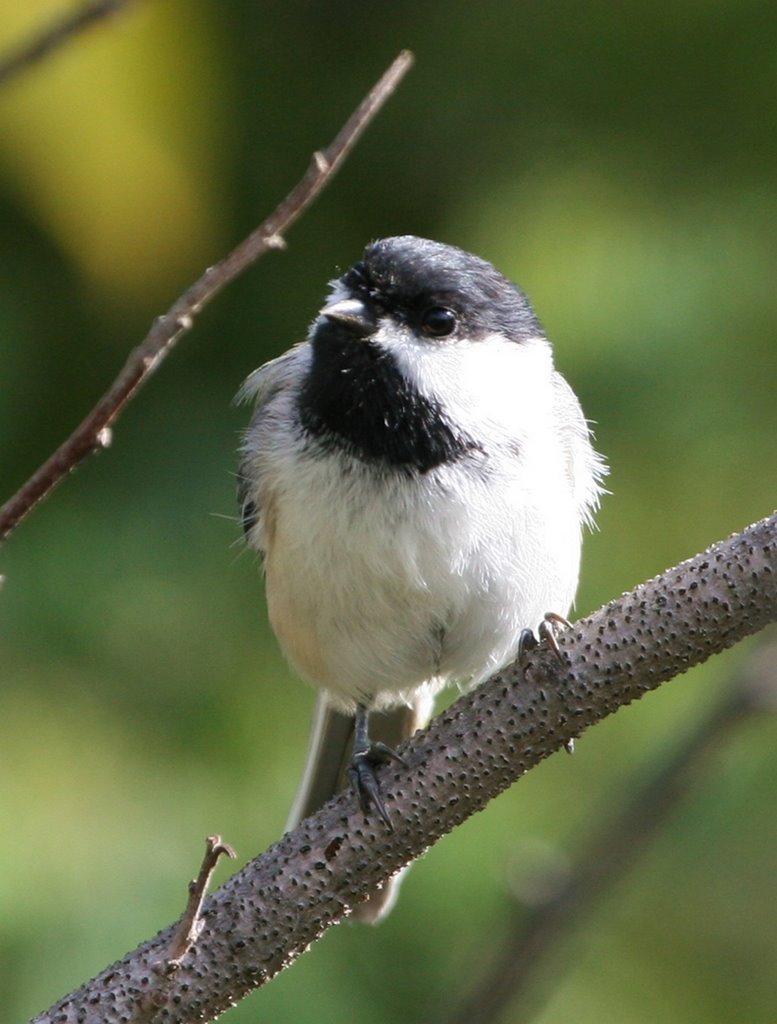
For North American birders, the results regarding chickadees are intriguing. Though the black-capped chickadee and carolina chickadee interbreed and are similar enough in appearance to make identification difficult, they are not as closely related as one might think. Instead, black-capped is more closely related to the mountain chickadee. Among carolina chickadees, there are significant genetic differences between the two subspecies, the eastern extimus and the carolinensis subspecies in Louisiana. Whether that would be enough to call for a species split is not addressed in the Birding summary.

Monday, July 10, 2006

New AOU Checklist for North America

The American Ornithologists' Union has released the 47th Supplement to their Checklist of North American Birds, the 6th supplement they have released since the publication of the Checklist's 7th edition. The supplement makes the following changes to the list:
Changes in this Supplement fall into the following categories: (1) three species are added because of splits from species already on the list (Calonectris edwardsii, Dendragapus fuliginosus, Loxigilla barbadensis); (2) one species is added because of new distributional information (Fregetta tropica); (3) two species replace others presently on the list because of splitting of extralimital forms (Cuculus optatus, Ficedula albicilla); (4) one species name (Streptopelia risoria) is changed because of recognition of its status as a feral form of S. roseogrisea; (5) one family is merged into another (Dendrocolaptidae into Furnariidae), with no resultant nomenclatural changes; (6) one subfamily is elevated to status of family (Stercorariidae), with no resultant nomenclatural changes; (7) one genus (Asturina) is merged with another (Buteo), resulting in a new name combination (B. nitidus); (8) one species (sissonii) is transferred from one genus (Thryomanes) to another (Troglodytes); and (9) two species (Myiozetetes similis, Catharus mexicanus), in addition to three of the four added to the entire list [see (1) and (2) above], are added to the list of species known to occur in the United States.
Of these, the one likely to affect the most North American birders is the first. Blue Grouse (Dendrapagus obscurus) has been split into two species, Dusky Grouse (D. obscurus) and Sooty Grouse (D. fuliginosus). The two species were split based on mitochodrial DNA and behavioral evidence. Sooty Grouse inhabits the Pacific coast, while Dusky Grouse claims the interior mountain west. There is an intergrade zone in Washington state. The paper that led to the split is here.

In addition to the changes listed in the first blockquote, the AOU has rearranged species into new genera within the sandpiper and tern families. In the case of sandpipers, species in the
Heteroscelus and Catoptrophorus genera have been moved to the genus Tringa, so that the list is now as follows:
Xenus cinereus Terek Sandpiper
Actitis hypoleucos Common Sandpiper
Actitis macularius Spotted Sandpiper
Tringa ochropus Green Sandpiper
Tringa solitaria Solitary Sandpiper
Tringa brevipes Gray-tailed Tattler
Tringa incana Wandering Tattler
Tringa erythropus Spotted Redshank
Tringa melanoleuca Greater Yellowlegs
Tringa nebularia Common Greenshank
Tringa semipalmata Willet
Tringa flavipes Lesser Yellowlegs
Tringa stagnatilis Marsh Sandpiper
Tringa glareola Wood Sandpiper
Tringa totanus Common Redshank
Five genera have been split from the Sterna genus in the tern family: Onychoprion, Sternula, Gelochelidon, Hydroprogne, and Thalasseus. The new order is as follows:
Anous stolidus Brown Noddy
Anous minutus Black Noddy
Procelsterna cerulea Blue-gray Noddy
Gygis alba White Tern
Onychoprion fuscatus Sooty Tern
Onychoprion lunatus Gray-backed Tern
Onychoprion anaethetus Bridled Tern
Onychoprion aleuticus Aleutian Tern
Sternula albifrons Little Tern
Sternula antillarum Least Tern
Sternula superciliaris Yellow-billed Tern
Phaetusa simplex Large-billed Tern
Gelochelidon nilotica Gull-billed Tern
Hydroprogne caspia Caspian Tern
Larosterna inca Inca Tern
Chlidonias niger Black Tern
Chlidonias leucopterus White-winged Tern
Chlidonias hybrida Whiskered Tern
Sterna dougallii Roseate Tern
Sterna hirundo Common Tern
Sterna paradisaea Arctic Tern
Sterna forsteri Forster’s Tern
Thalasseus maximus Royal Tern
Thalasseus bergii Great Crested Tern
Thalasseus sandvicensis Sandwich Tern
Thalasseus elegans Elegant Tern